Tree service in Central Point through this site begins with a free call to (541) 855-3179, which connects you with one independent company that holds an active Oregon CCB license. Tell it you are in Central Point and ask whether it takes jobs on your street. Pruning, removing a tree, grinding a stump and checking a tree that looks sick are the usual requests. For everyday work the estimate is normally free, but that is for the company to say, so ask, and have the price put in writing once it has seen the tree.
Central Point has its own tree chapter in its city code, separate from Medford's, and a few of its numbers matter for ordinary pruning. The sections below cover the pruning limit that triggers city approval, how high branches must sit over sidewalks and streets, who looks after the planter strip, and what to do with the branches afterward.
How much pruning needs city approval in Central Point
Heavy pruning of some Central Point trees needs the city's approval first, and the code puts a number on "heavy."
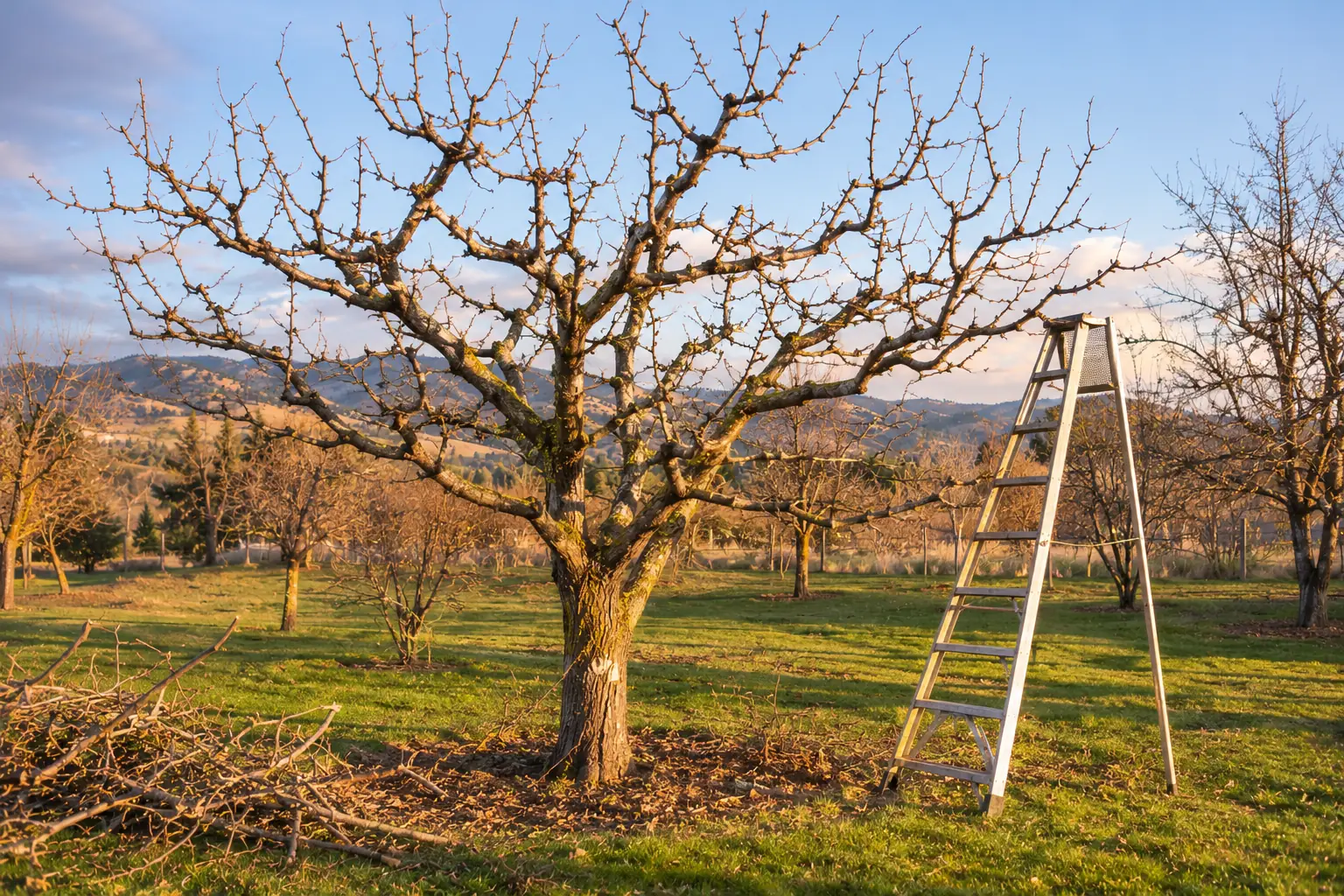
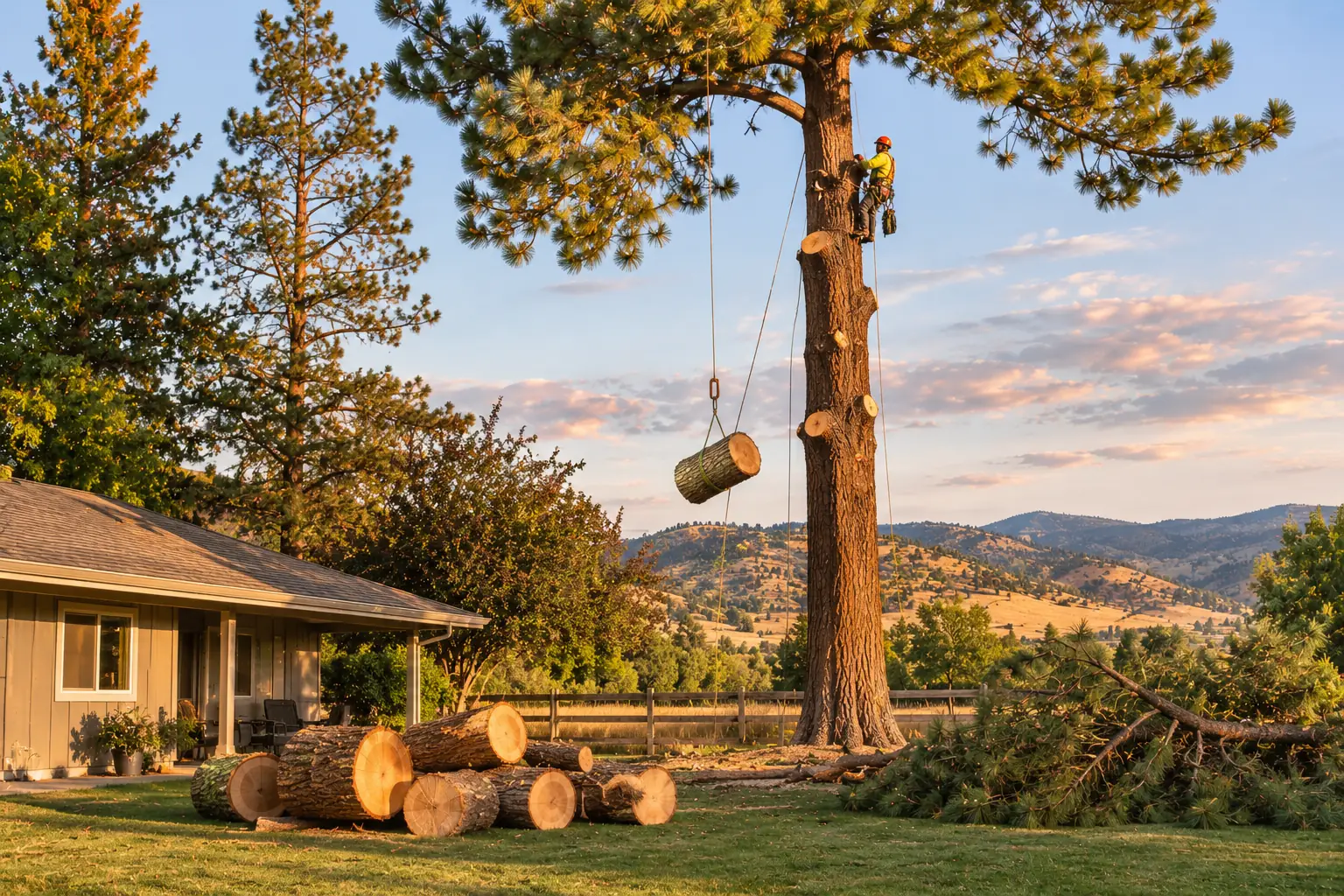
Chapter 12.36 of the Central Point Municipal Code defines major pruning as taking off more than 20 percent of a tree's canopy, any topping, or disturbing more than 10 percent of its root system. For trees in the chapter's protected groups (frontage trees, historic trees and significant trees), removal or major pruning by the owner needs city approval, and the application goes to the city manager. Trees outside those groups count as private trees.
That 20 percent figure is useful when you talk to a tree service. A light cleanup that takes out deadwood and a few crossing limbs usually stays well under it. A job pitched as "cut it way back" may not. Ask the company to estimate how much of the canopy it plans to remove, and if your tree sits along the street or might be on a city list, ask the city before the work date. The main number at City Hall is 541-664-3321.
The chapter also has its own section on tree topping (12.36.070). Since topping already counts as major pruning, treat any plan to top a frontage tree as something the city must see first.
Clearance heights over Central Point sidewalks and streets
Central Point asks owners to keep branches high enough for people and vehicles to pass underneath, and the height depends on the street.
Section 12.36.100 of the city's street tree standards and its Tree Trimming page set these minimums:
| Over this surface | Keep branches at least |
|---|---|
| Sidewalk | 8 feet up |
| Local street | 14 feet up |
| Collector street | 16 feet up |
| Arterial street | 18 feet up |
| Shrubs near a street corner | No taller than 3 1/2 feet |
Newly planted trees get some slack provided they do not get in the way of traffic, sight lines or public safety. The city page adds that its own crews cut back overgrown or risky spots in winter, while most trees are dormant.
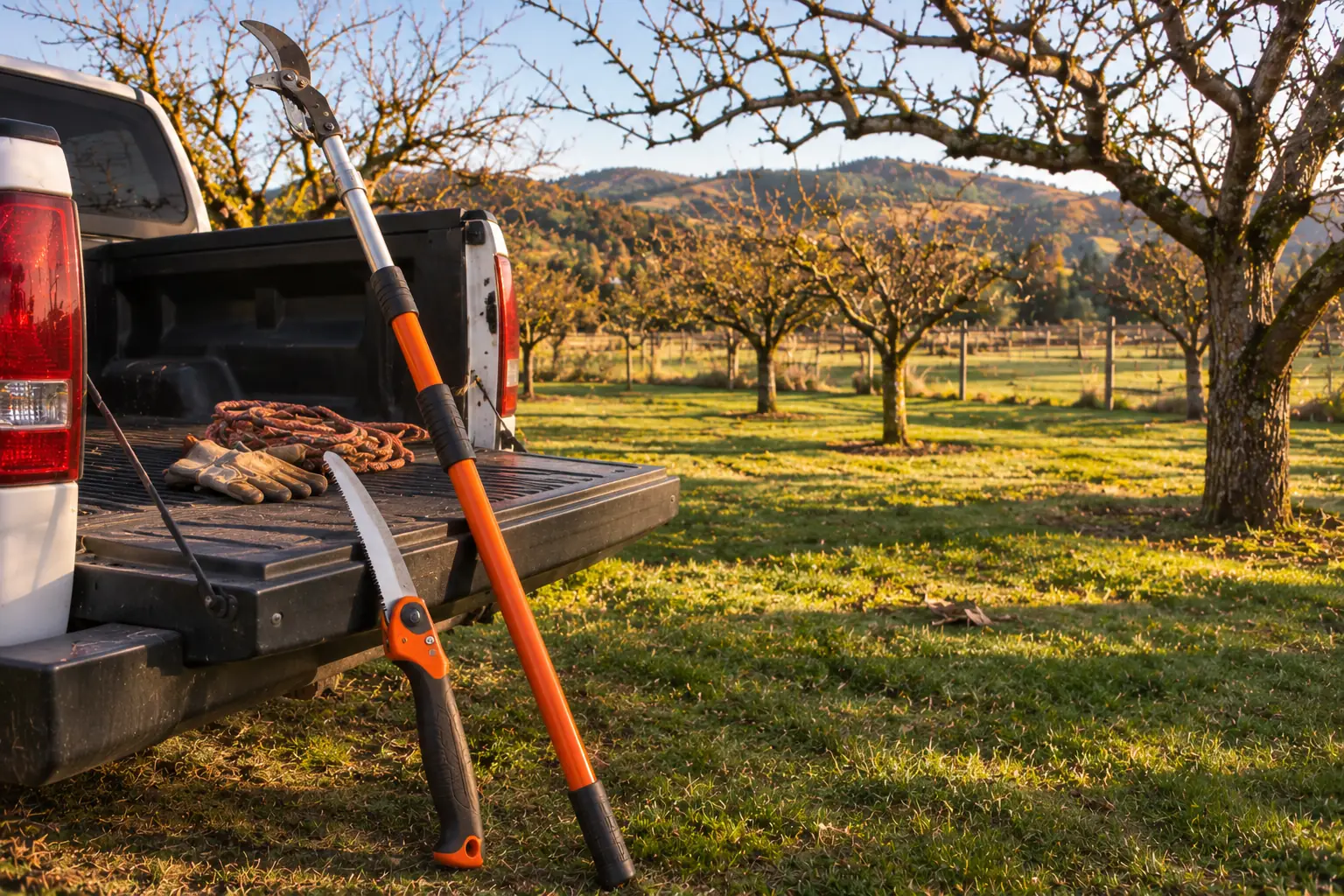
The pruning cut that meets these heights is called crown raising, or limbing up. Done well, it takes lower limbs back to the trunk or a larger branch over a few seasons, instead of all at once. Our page on tree trimming and pruning explains the cuts a good crew makes and the ones to avoid.
The planter strip tree is usually yours
Outside the downtown core, the tree between the sidewalk and the curb in Central Point is the adjoining owner's job to maintain.
The street tree standards make upkeep the ongoing duty of the owner next to the tree. The one exception is the downtown core, the blocks inside Manzanita, Oak, Front and 6th Streets. Existing street trees are meant to stay, and only the city manager can approve taking one out, as part of site development or a street project.
When demolition or street construction takes out a street tree, the code asks for a replacement of similar value, or a payment to the city to plant one. The value is figured with the "Guide for Plant Appraisal" from the International Society of Arboriculture's Council of Tree and Landscape Appraisers.
Replanting after a removal
If a Central Point street tree comes out with approval and you plant a new one, the same section sets where it can go and what size it must be.
- Choose a species from the city's approved street tree list, unless the planning commission approves another.
- Start with a tree at least 1 1/2 inches in caliper, measured 6 inches above the ground.
- Keep it 10 feet from fire hydrants, utility poles and sewer, storm or water lines.
- Keep it 20 feet from streetlights and street intersections, and 5 feet from another street tree.
- On local streets, plant in a landscape strip at least 3 feet wide, and never closer than 2 1/2 feet to the face of the curb.
Spacing depends on mature size, with small trees no more than 20 feet apart, medium trees 30 feet and large trees 40 feet. Before anyone digs, call 811 to have buried utilities marked.
Branches, chips and burn days
Central Point is served by Jackson County Fire District 3, so its burn rules apply to yard debris from tree work.
Fire District 3 covers Central Point along with White City, Eagle Point, Gold Hill, Sams Valley and other communities, and two of its career stations are in Central Point. Its burn permit page says residential burning inside the Air Quality Maintenance Area is banned from November 1 through February 28 and at all times during fire season, and that any burning needs a registered permit and a declared burn day. The recorded burn day message is at 541-776-7007.
Chipping and hauling avoid the question. If you plan to burn a pile yourself, check your address on the district's map first.
What Central Point homeowners tend to ask for
In a town with many planter strips and mature yard trees on modest lots, a few kinds of jobs come up again and again.
- Raising limbs that hang low over a sidewalk or block a sign.
- Thinning a big shade tree that leans toward a roof or a neighbor's yard.
- Removing a planter strip tree whose roots have lifted the sidewalk, once the city signs off.
- Grinding the stump left behind, covered on our stump grinding page.
If a branch has already come down on a roof, car or fence, read the emergency tree service page and call right away. For a tree tangled in wires, stand 35 feet clear, call 911, and then ring Pacific Power's downed-wire line, 1-877-508-5088, before calling about the tree.
Nearby pages
Prices vary with tree size, access and cleanup, and the written estimate from the company you hire is the figure to plan around. The tree service cost guide has sourced ranges. Neighboring towns have their own pages: tree service in White City to the north and tree service in Jacksonville to the southwest. The home page lists every service.
Frequently asked questions
How much can I prune a tree in Central Point without asking the city?
For a private tree, the street tree chapter does not require approval. For a frontage, historic or significant tree, removing more than 20 percent of the canopy, topping it, or disturbing more than 10 percent of the roots counts as major pruning and needs city approval first.
How high do branches have to be over a Central Point sidewalk?
At least 8 feet over a sidewalk, 14 feet over a local street, 16 feet over a collector and 18 feet over an arterial, under section 12.36.100.
Who pays to prune the tree in my planter strip?
Unless you are downtown, inside Manzanita, Oak, Front and 6th Streets, the owner next to the street tree looks after it, so the pruning bill is usually yours.
Can I burn the branches from tree work in Central Point?
Only with a Fire District 3 permit, on a declared burn day, outside fire season, and not from November 1 through February 28 if you live inside the Air Quality Maintenance Area. Call 541-776-7007 for the day's status.